
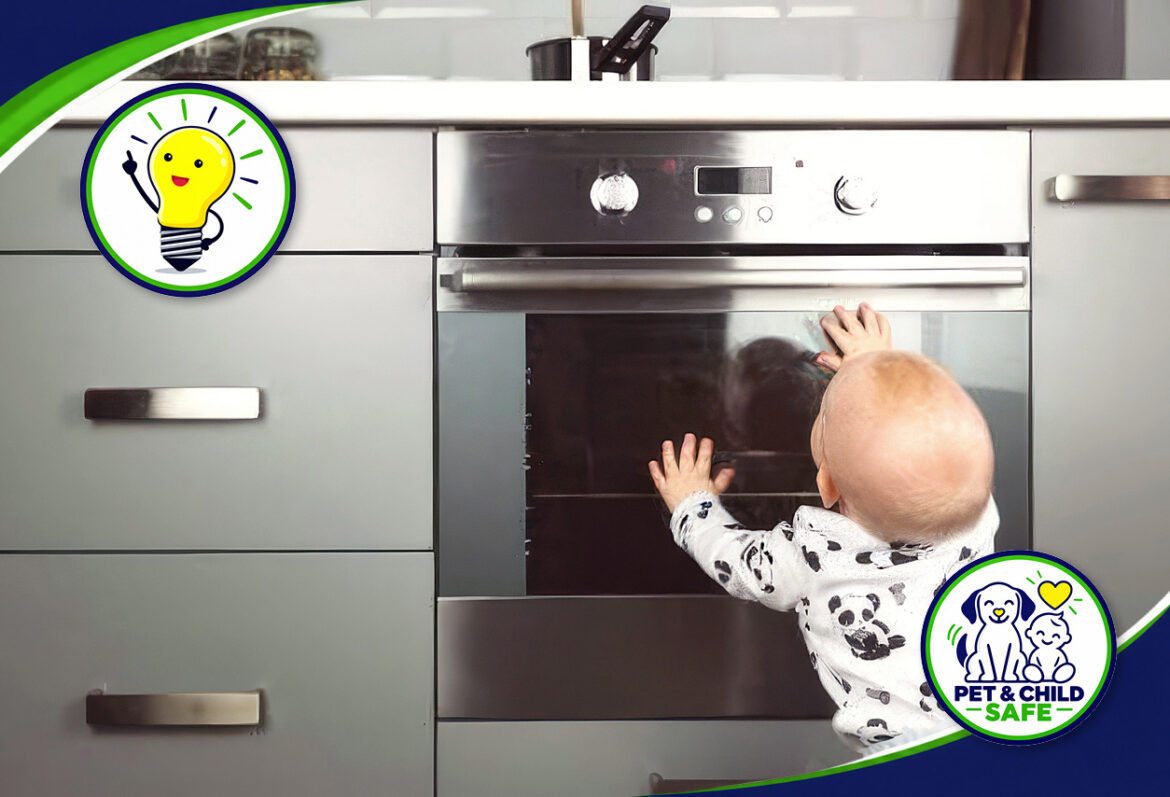
How to Childproof your Kitchen
How to Childproof Your Kitchen
The kitchen is often the busiest room in the house, and naturally, our curious little explorers want to be right in the middle of the action! Unfortunately, tiny hands have a remarkable talent for finding exactly what they shouldn’t be touching. Hot ovens, tempting cupboard doors, and mysterious drawers filled with fascinating treasures!
The good news? With a few practical childproofing measures, you can make your kitchen a safer place for your little one to explore, while keeping the cooking adventures (and the chaos!) a little more manageable.
KITCHEN SAFETY
- Some of the most common kitchen hazards include burns and scalds from hot food, water, and cooking appliances, accidental poisoning, choking on small objects, falls, and little fingers getting trapped in drawers or cupboard doors. And, of course, there’s always the possibility of tripping over a curious toddler who has decided that right behind your feet is the perfect place to sit!
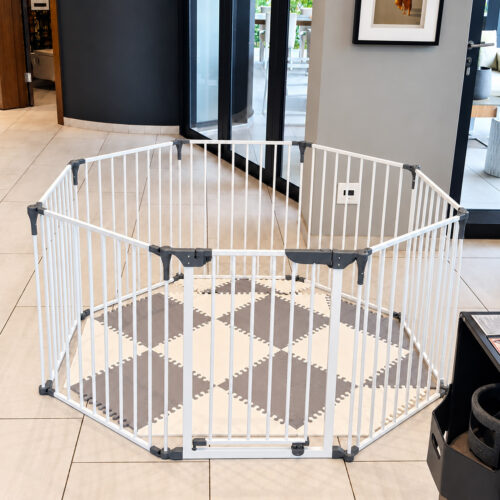
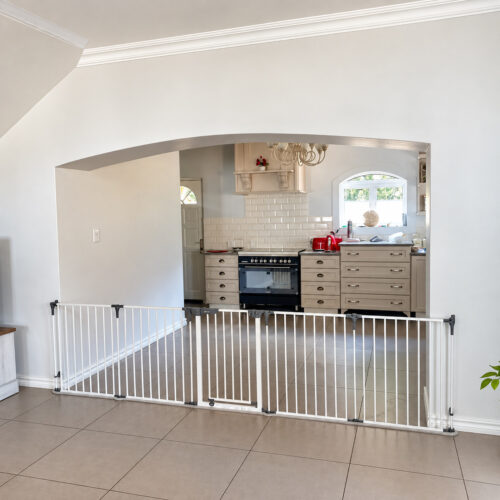
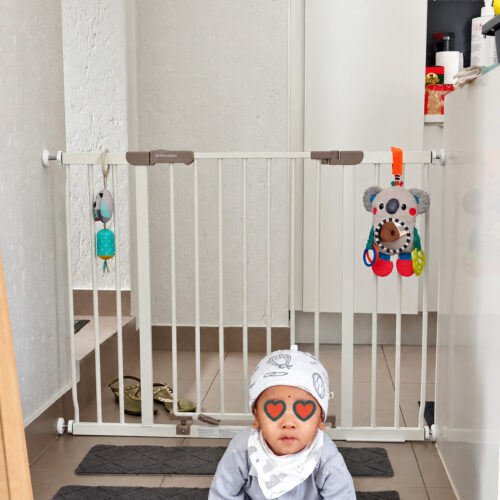
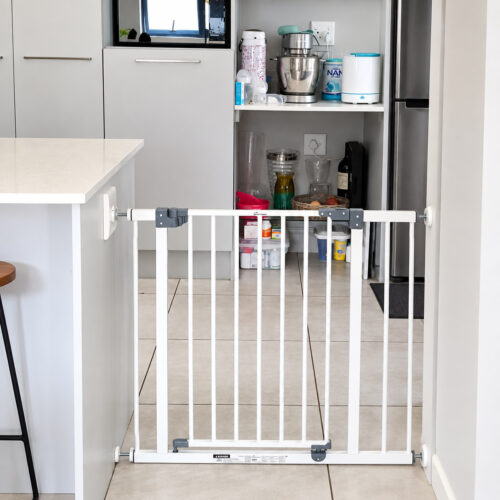
- Keeping little ones safely away from cooking areas is one of the simplest ways to prevent accidents. During busy meal preparations, consider using an age-appropriate playpen in a safe, supervised area or installing a baby safety gate to restrict access to the kitchen. Of course, not every kitchen layout allows for this, especially in open-plan homes, so additional childproofing measures are equally important.
ADULT SUPERVISION
IMPORTANT DISCLAIMER: No safety device or change to your home can replace a responsible, attentive caregiver.
Adult supervision is ALWAYS essential when babies and children are present, even in a baby-proofed home. Child safety products help reduce risks, but they cannot prevent every accident.
Keep toxic substances, dangerous plants, sharp objects, and breakable glass items securely stored out of children’s reach. Use locked storage wherever possible.
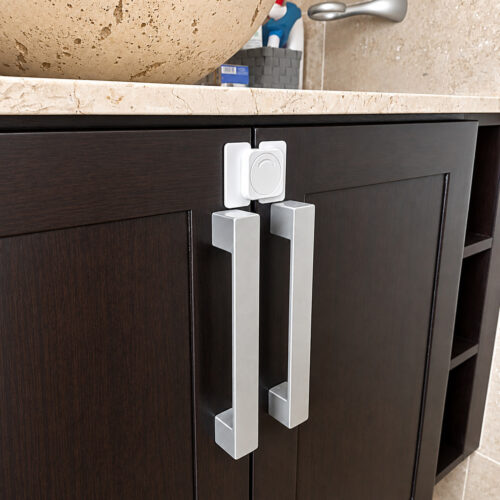
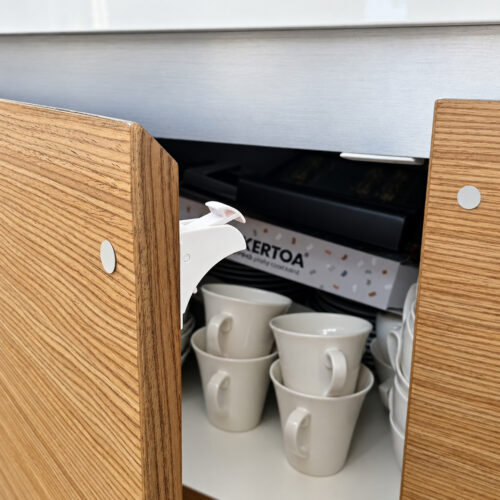
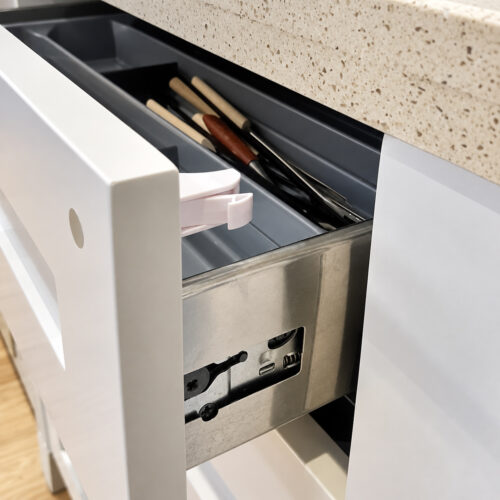
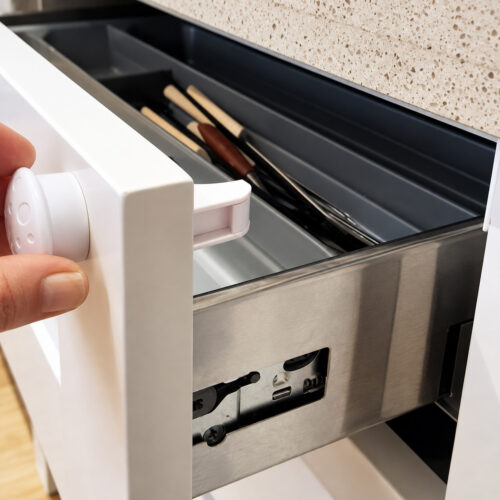
CHILDPROOF LOCKS FOR KITCHEN CABINETS AND DRAWERS
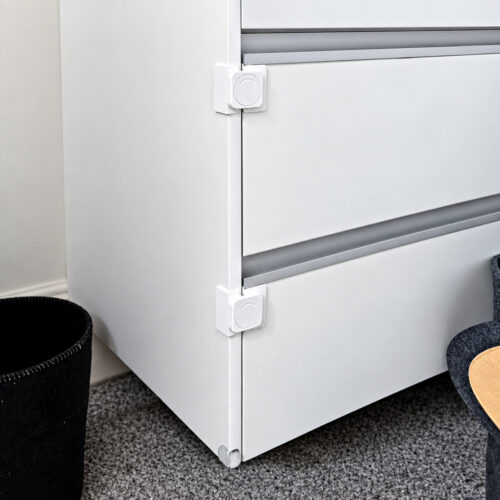
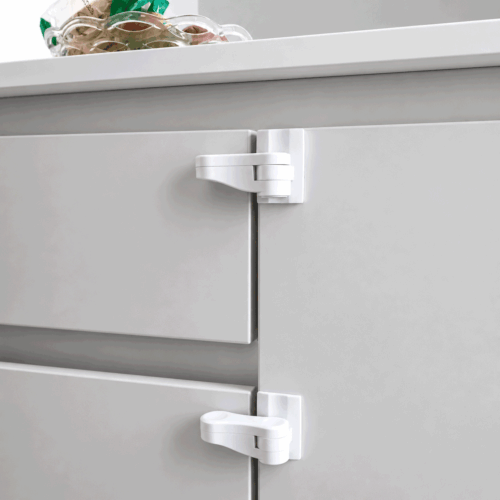
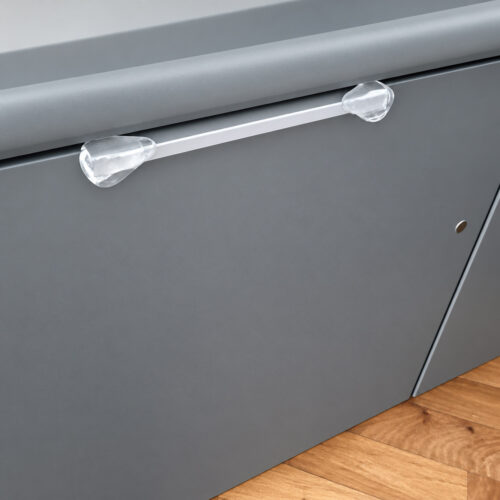
- Install childproof locks on kitchen cupboards and drawers that your little explorer can reach. Murphy’s Law says it will be that ONE cupboard or drawer you thought was perfectly safe to leave unlocked… and BAM! That’s where the trouble begins!
- Besides keeping curious little hands away from potentially dangerous items, suitable cupboard and drawer locks can also help prevent those painful little finger-pinching accidents.
- Keep cleaning products, detergents, dishwasher tablets, and other hazardous substances securely locked away, preferably in a high cupboard. Never rely on child-resistant packaging alone, and always keep these products in their original, clearly labelled containers.
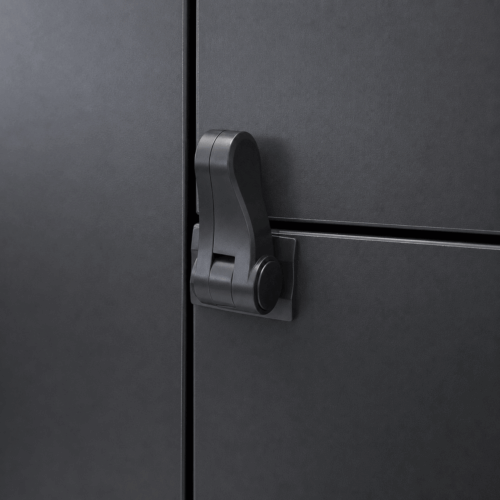
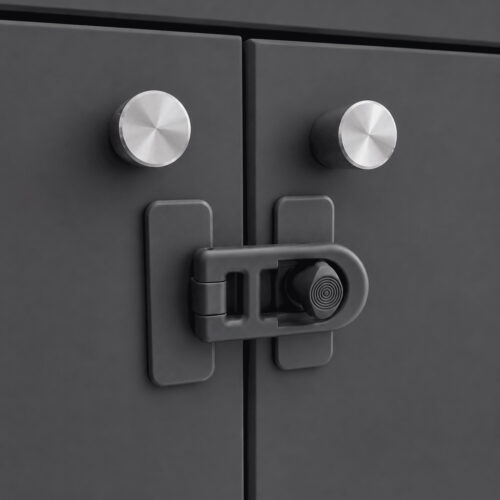
CHILDPROOF DOOR LOCKS, ANTI-PINCH GUARDS + BABY GATES
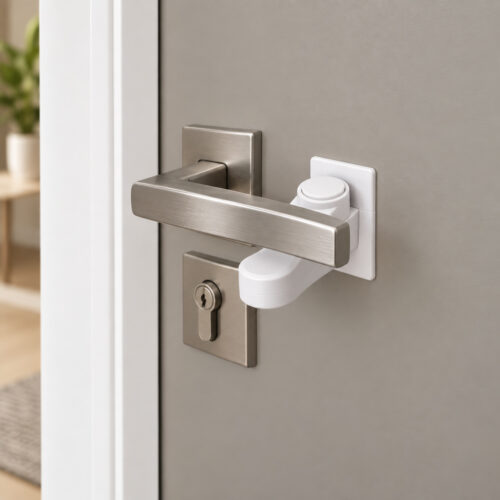
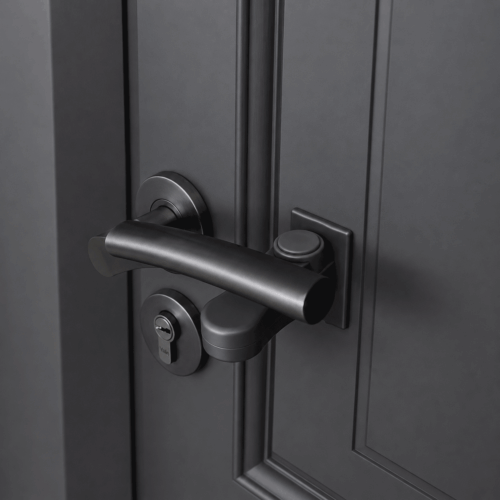
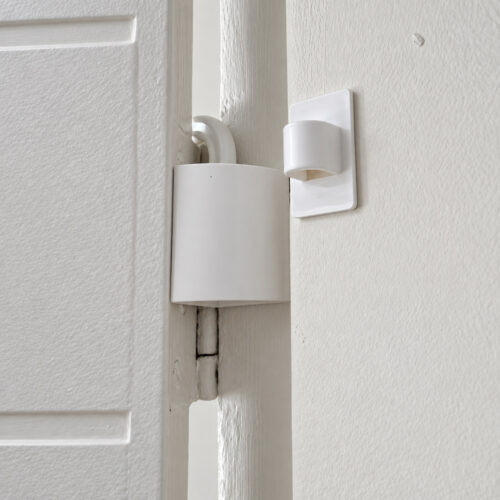
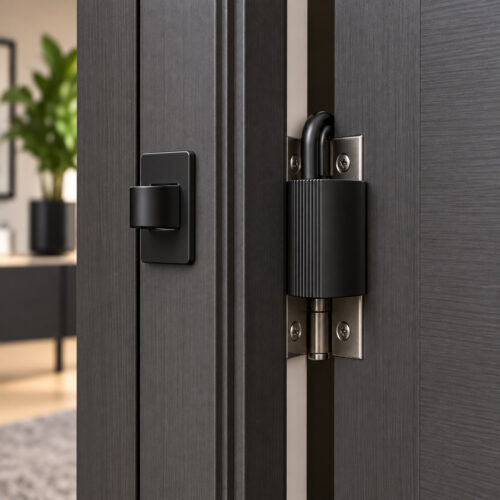
- Add a childproof door lever lock or baby safety gate to the scullery or pantry doors; these areas should be off-limits.
- Kitchens should be well ventilated. Leave doors and windows open where they do not pose other risks.
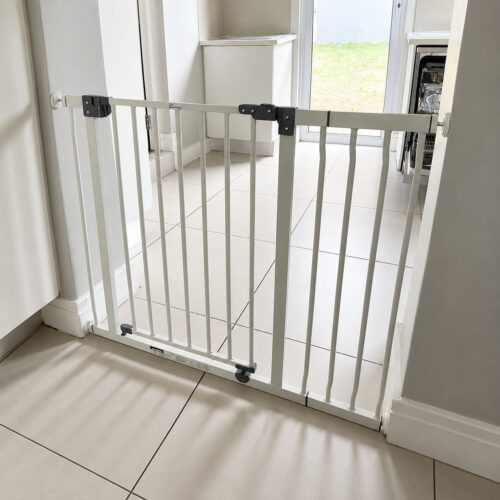

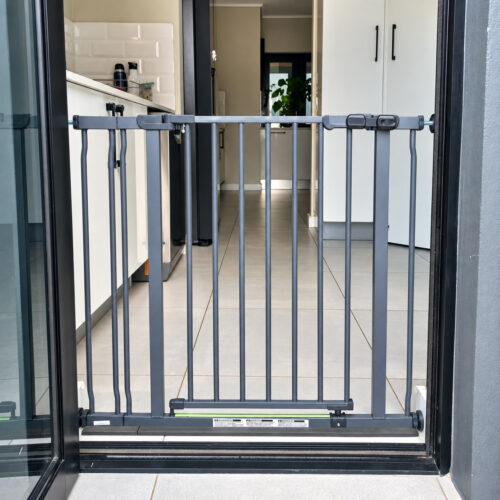
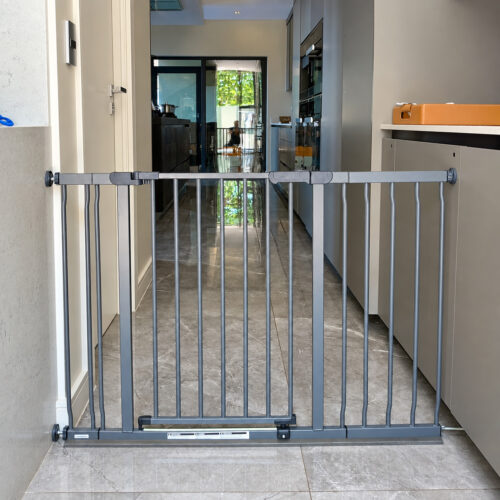
CHILDPROOFING THE KITCHEN HOB
- Keep little ones safely away from the stove, hob, and oven while cooking. Hot surfaces, boiling liquids, steam, and splattering oil can cause serious burns and scalds in seconds. Never leave young children unattended near cooking appliances.
- Use the back burners whenever possible and turn pot and pan handles inward, away from the front and sides of the hob. Make sure handles are not positioned over another hot burner.
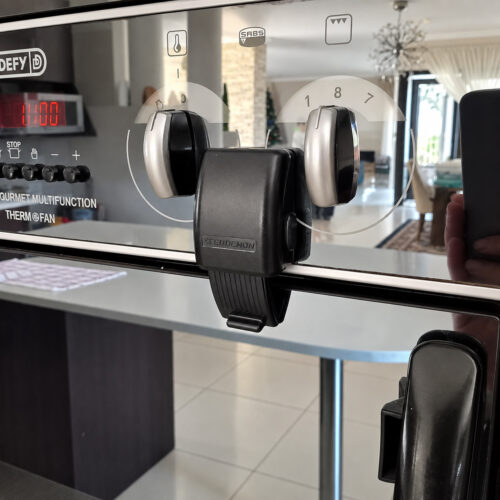
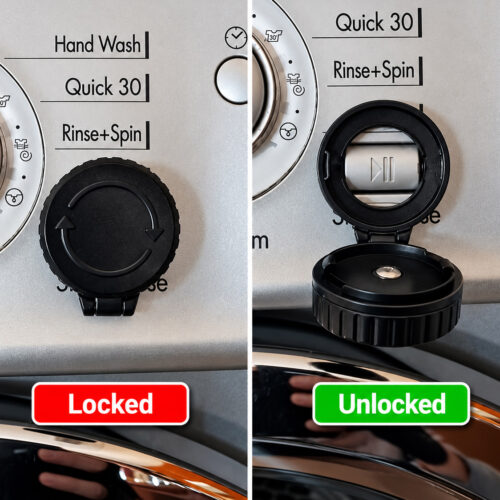
- Install a suitable childproof oven door lock to help prevent curious little hands from opening the oven. Remember, an oven lock does not prevent burns from hot oven doors or glass, so children must still be kept at a safe distance.
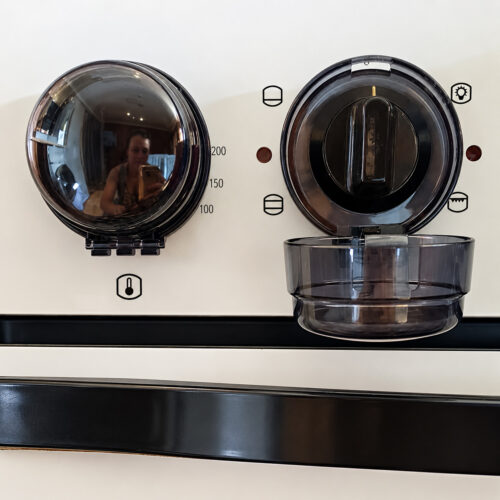
- Fit childproof stove knob covers compatible with your appliance to help prevent children from accidentally switching burners on. Always check that the covers do not interfere with the safe operation of the stove.
- Switch off cooking appliances when not in use. Where appropriate, switch the stove or oven off at its wall isolator, provided this is consistent with the manufacturer’s instructions. Never rely on childproof locks or knob covers as the only safety precaution.
- Keep electrical appliance cords, tea towels, oven gloves, and other flammable items away from hot cooking surfaces. Avoid carrying hot food or drinks while holding a child.
- Keep a suitable fire extinguisher readily accessible to adults and ensure household members know how to use it safely. Choose an extinguisher appropriate for the types of fires that may occur in your kitchen, including cooking-oil fires. Never use water on burning cooking oil.
- For kitchens with gas appliances, ensure the installation and maintenance are carried out by appropriately qualified professionals. Consider a suitable gas leak detector designed for the type of gas used. If you suspect a gas leak, avoid flames and electrical switches, leave the area, and contact the appropriate emergency service or gas supplier from a safe location.
CHILDPROOF APPLIANCES
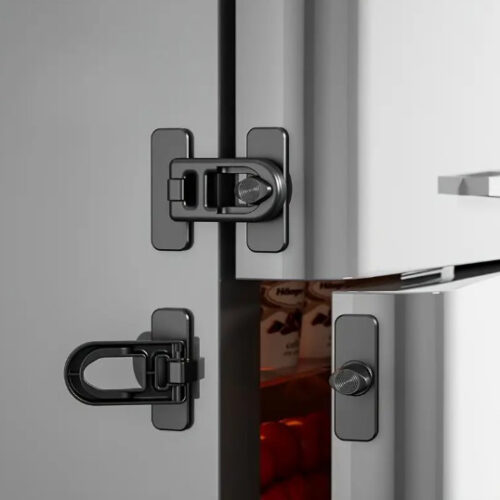
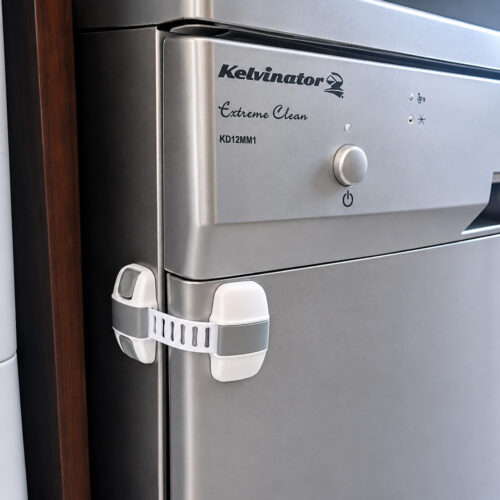
- Install a Refrigerator Lock.
- Ironing should not be done in an area where your little one is likely to be. Ironing should be done in a space that is inaccessible to a child.
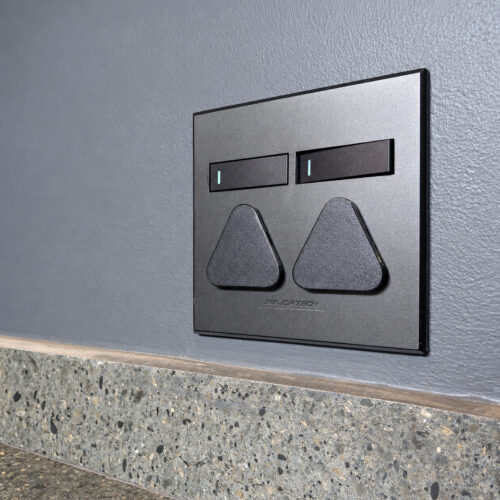
- Keep appliances, cords, hot beverages, and pots out of reach and turn appliances off at the wall when not in use.
- Have an emergency contact and post it on your fridge, low enough for a child to reach. Do NOT take for granted that these numbers are always in use. Update these numbers regularly by phoning & checking that they exist.
SHARP CORNERS + EDGES
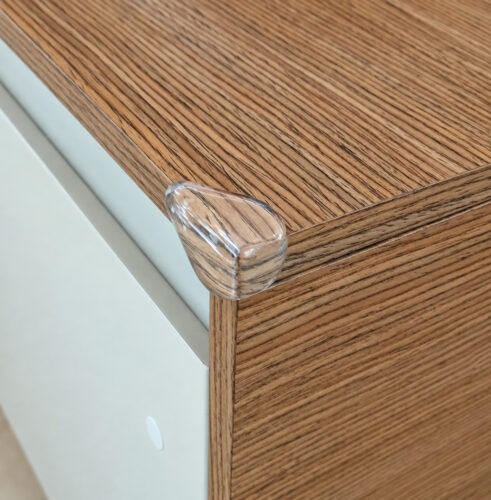
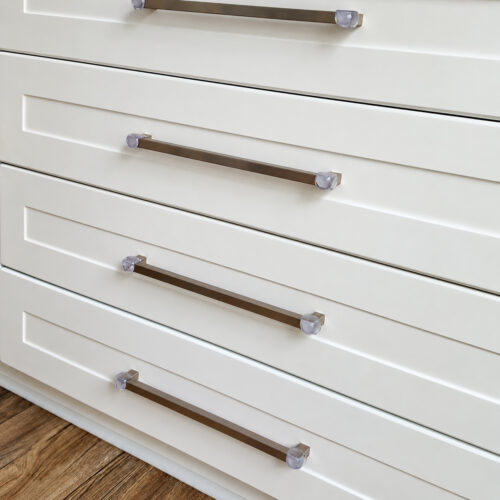
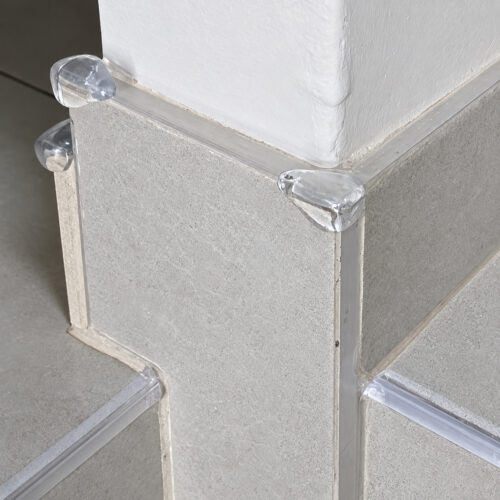
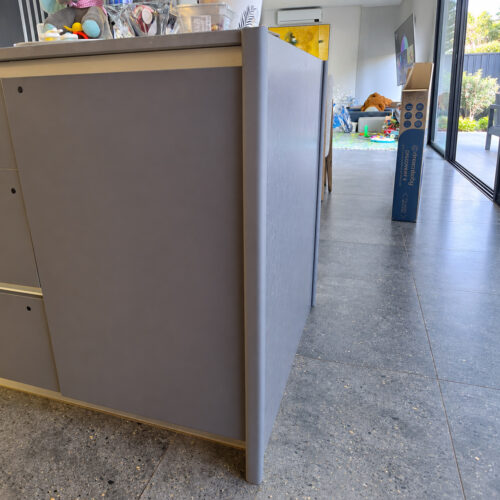
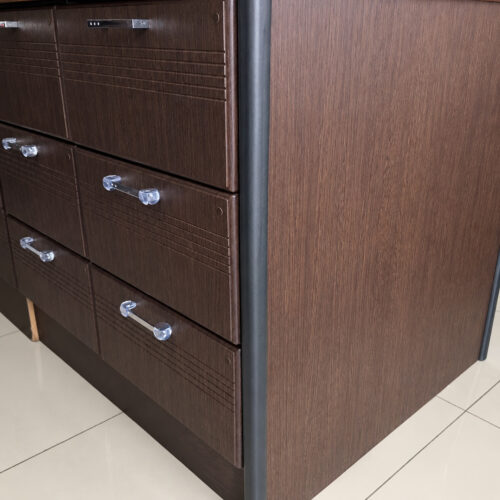
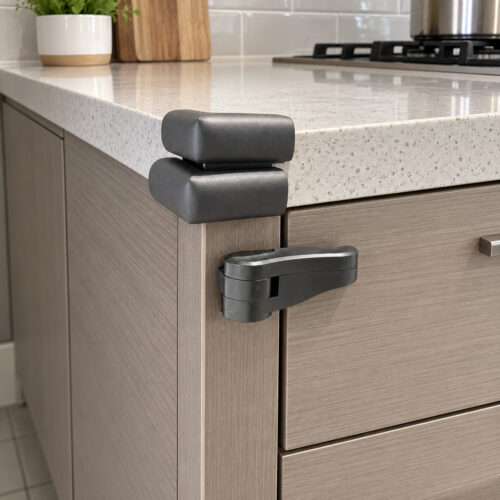
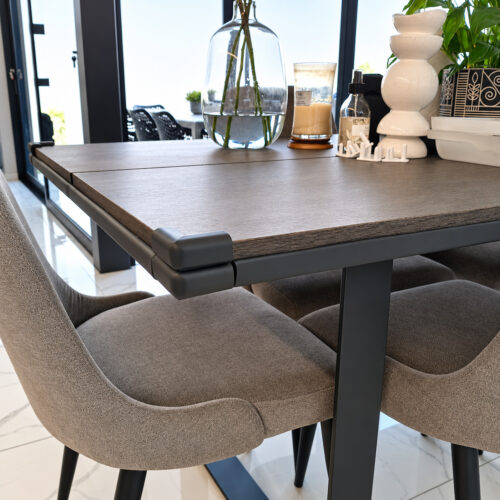
- Protect sharp tiled edges and corners. Sharp edges on tiled skirting boards, kitchen counters, furniture, and cabinetry can cause injuries during falls.
- Install suitable childproof corner and edge protectors to help cushion accidental bumps. Check regularly that protectors remain securely attached.
MORE KITCHEN CHILDPROOFING TIPS!
- Avoid using tablecloths that can be pulled.
- Beware of TRIPPING HAZARDS! The Kitchen floor should be obstacle-free!
- Don’t leave a bucket with water standing around.
- Never use loose rugs or carpets in the Kitchen unless they are non-slip (have a rubber backing) and specifically designed for easy cleaning (simply wipe clean). This is to prevent slipping and tripping and for hygiene purposes.
- Dustbins should be placed in a childproof cabinet or in the scullery that has been blocked off with a childproof gate.
- Be AWARE of choking hazards! For example, pet food, fridge magnets, small toys, and pieces of food.
- General rule of thumb: Anything that can fit into a toilet roll inner should be kept out of reach.
- Keep emergency contact numbers clearly displayed and easily accessible. Place an up-to-date emergency contact list on your refrigerator or somewhere readily visible to caregivers and older children. Include the numbers for emergency medical services, your nearest hospital, your child’s doctor, and a trusted family member or neighbour. Never assume that emergency numbers remain unchanged. Check them periodically and make sure everyone responsible for your child’s care knows whom to contact in an emergency. For additional guidance, see our emergency preparedness and Chain of Survival information.
FOOD SAFETY
- Food safety starts with good hygiene! Harmful bacteria and viruses can cause foodborne illnesses, so a few simple precautions when preparing, cooking, and storing food can help keep the whole family safe.
- Wash your hands thoroughly with soap and water for at least 20 seconds before preparing food after using the toilet, changing nappies, handling pets, or touching raw meat, poultry, seafood, and eggs.
- Keep raw and ready-to-eat foods separate. Store raw meat, fish, and poultry in sealed containers on the bottom shelf of the refrigerator, away from salads, fruit, and other foods that will not be cooked.
- Use separate cutting boards and utensils for raw meat and ready-to-eat foods. Wash cutting boards, utensils, and work surfaces thoroughly with hot, soapy water after handling raw meat, poultry, seafood, or eggs. Sanitise food-contact surfaces when appropriate.
- Cook food thoroughly, especially meat, poultry, seafood, and eggs. Use a food thermometer where appropriate to check that food has reached a safe internal temperature. Avoid serving raw or undercooked eggs, meat, fish, or shellfish to babies and young children.
- Never use cracked or damaged eggs where contamination could have occurred. Keep eggs refrigerated and cook them thoroughly before serving them to young children.
- Refrigerate perishable foods promptly and follow the manufacturer’s storage instructions. Keep your refrigerator at 4°C or below, and avoid leaving cooked food or other perishables standing at room temperature for extended periods.
- Check food packaging before use. Never use food from swollen, bulging, leaking, or badly damaged tins or containers. Check expiry and use-by dates and follow the storage instructions provided by the manufacturer.
- Extra care when feeding babies and young children:
- Always check the expiry or use-by date on commercially prepared baby foods, including PURITY products. Never feed your child a product that is past its use-by date.
- Before opening a jar of baby food, check that the lid and safety seal are intact. The safety button should be depressed, and the lid should make a popping sound when first opened. Do not use jars with damaged seals, chipped glass, or rusty lids.
- Never feed your baby directly from a jar if you intend to keep the remaining food. Transfer a suitable portion into a clean bowl using a clean spoon. Saliva transferred from your baby’s mouth can contaminate food left in the jar.
- Refrigerate uncontaminated leftover baby food immediately after opening, with the lid securely closed. Always follow the manufacturer’s storage instructions and discard the food within the stated period. Different baby foods may have different storage requirements.
- Discard any uneaten food remaining in your baby’s feeding bowl. Do not return it to the original jar for later use.
- Keep the refrigerator off-limits to curious little explorers! Install a suitable childproof refrigerator lock to prevent toddlers from opening the fridge and reaching potentially hazardous items such as glass bottles, jars, medicines, or other unsuitable foods and drinks. Remember that medicines and other hazardous substances should also be stored securely, preferably in locked storage.
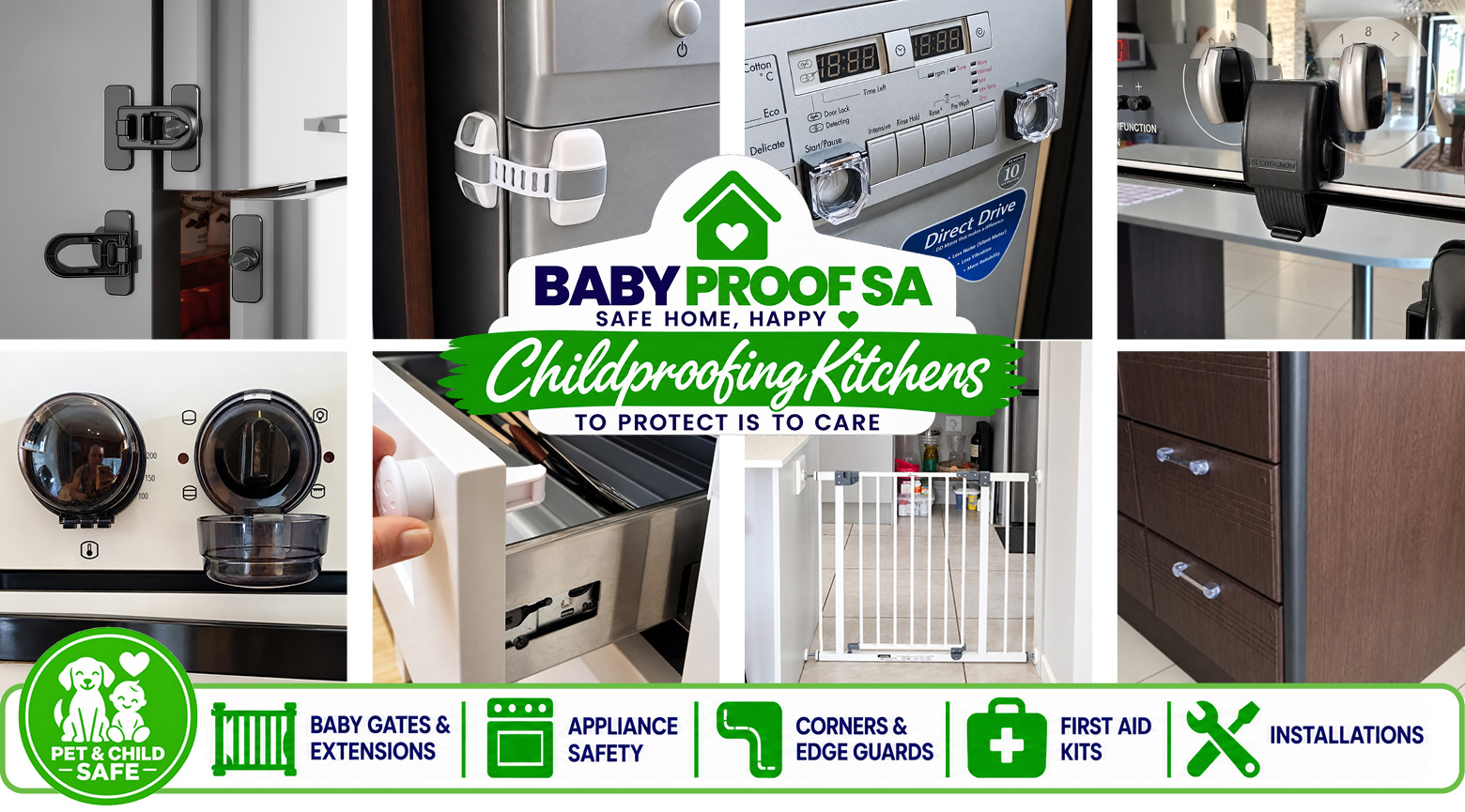
VIEW GALLERY
FIRST AID & EMS SERVICES
EMERGENCY AID AND CONTACTS
BE READY WHEN EVERY SECOND COUNTS!
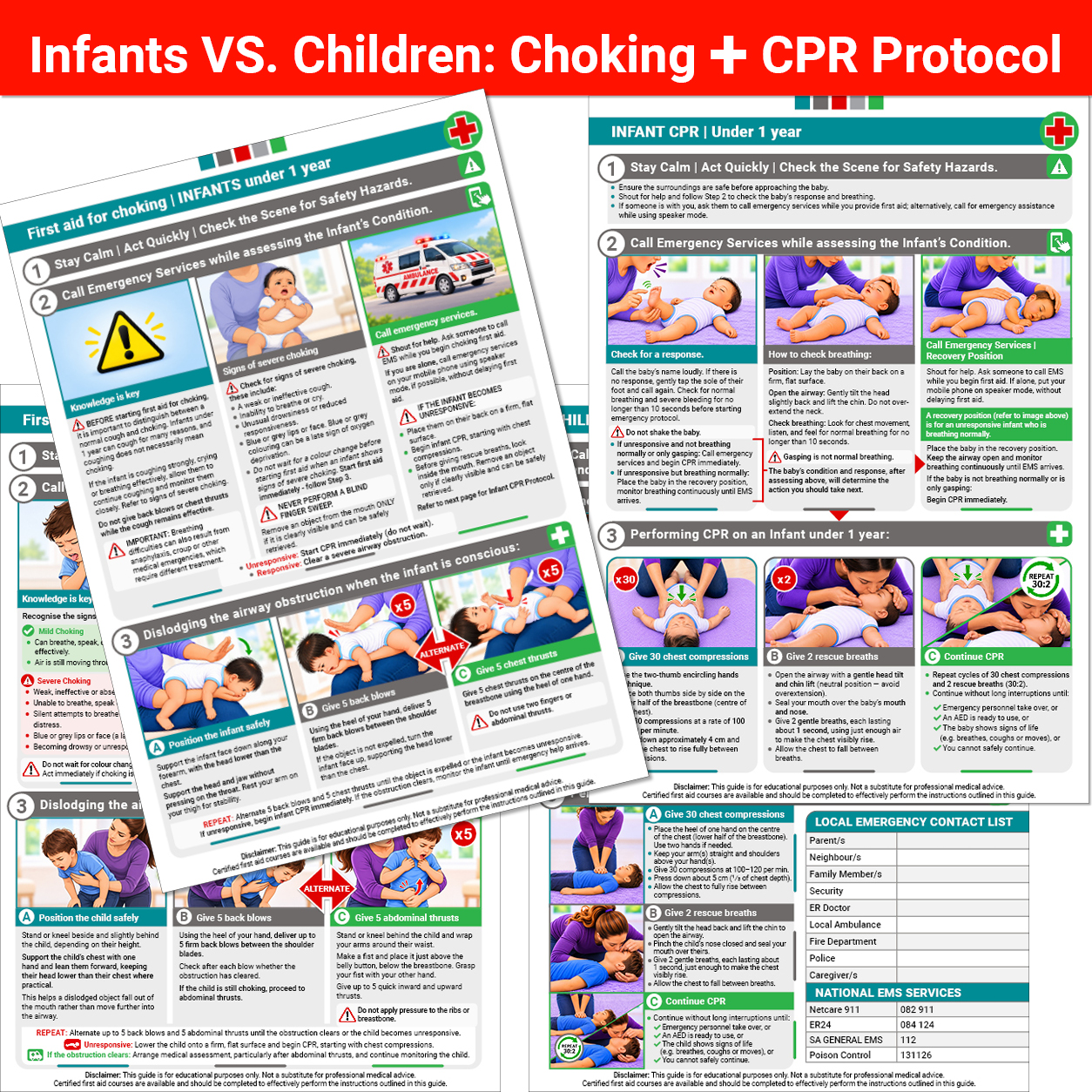
Keep an emergency contact list and a first-aid guide somewhere visible, such as on your fridge.
In an emergency, try calling different EMS numbers from multiple phones if possible, while continuing to provide first aid.
FREE DOWNLOAD: Infant and Child CPR and Choking First Aid Guide »
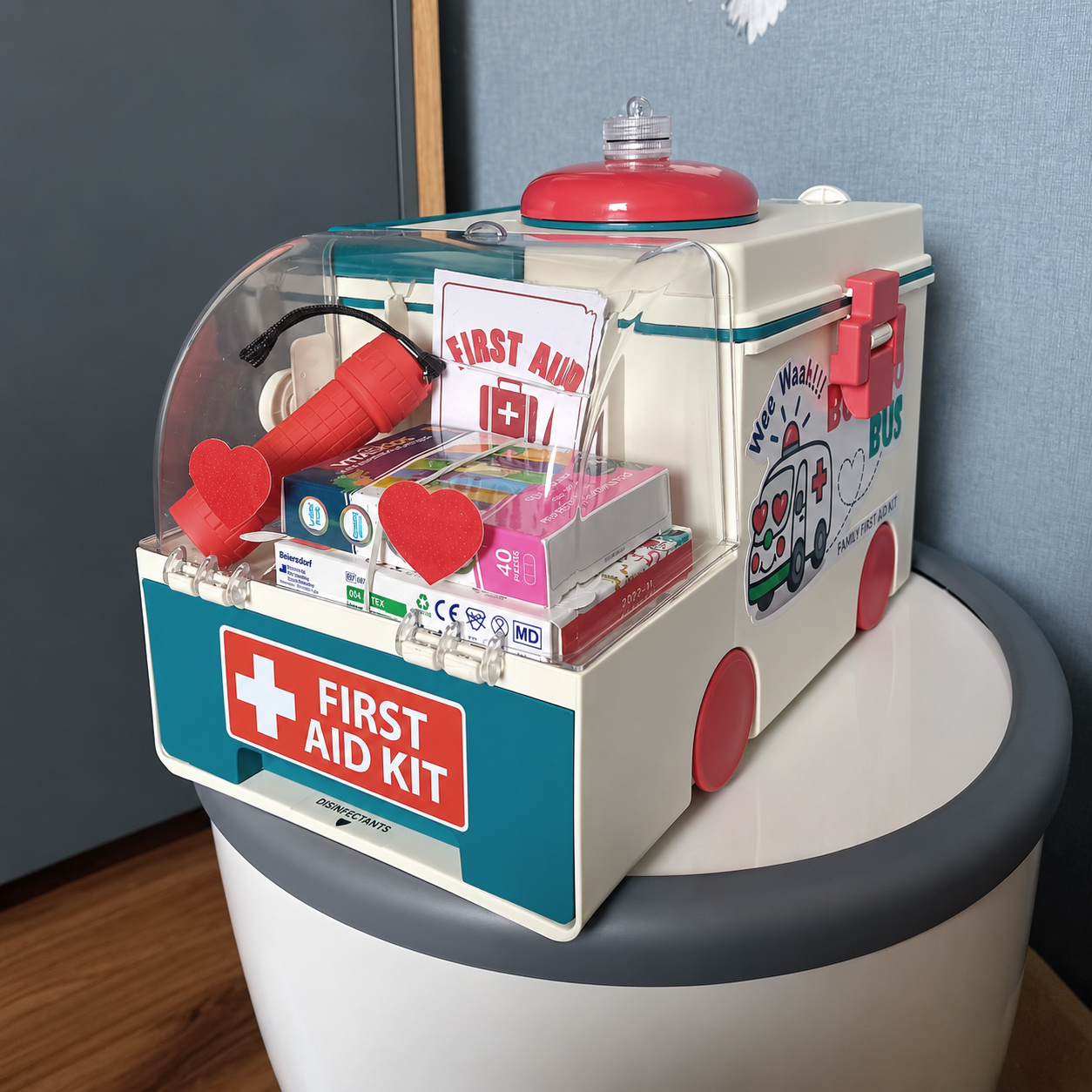
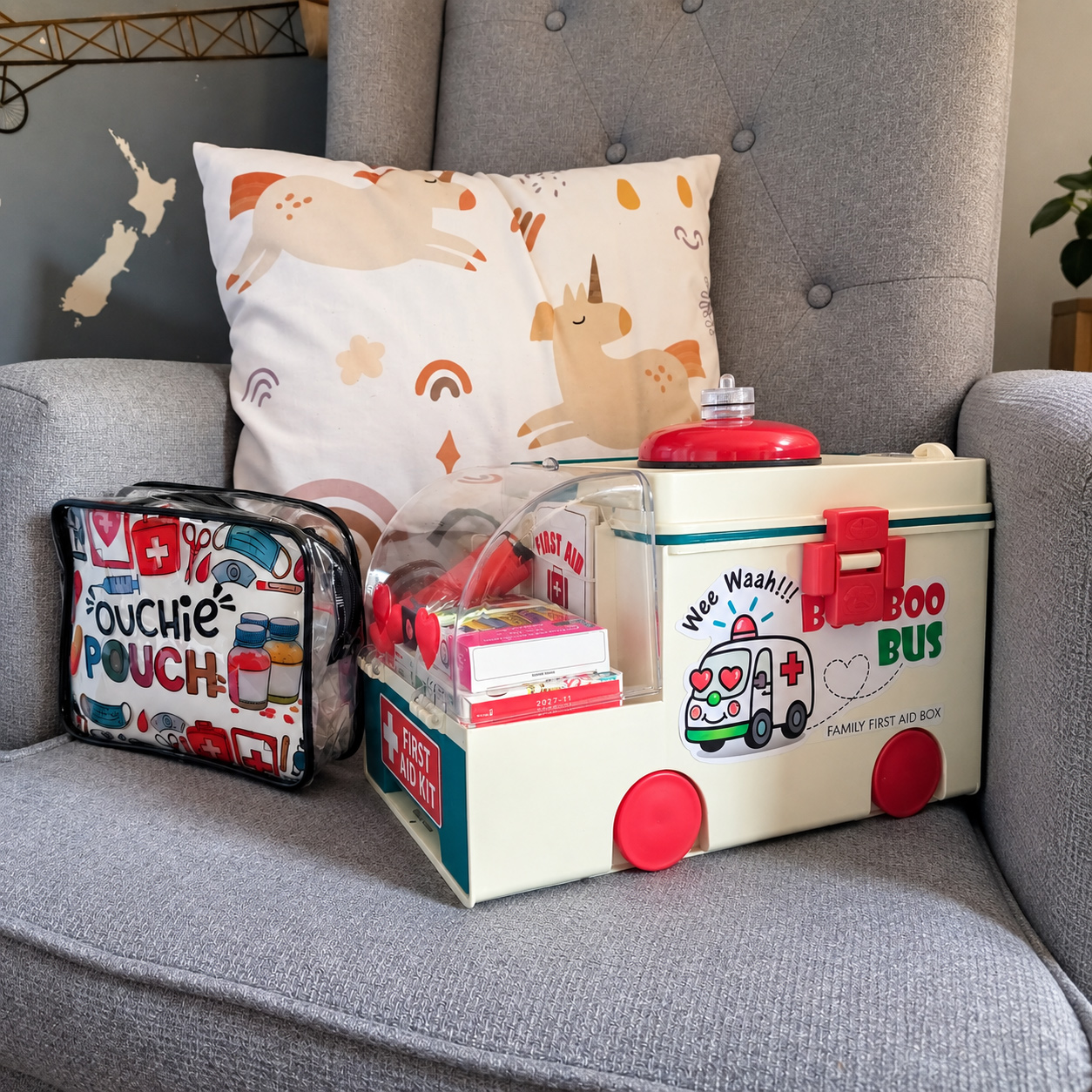
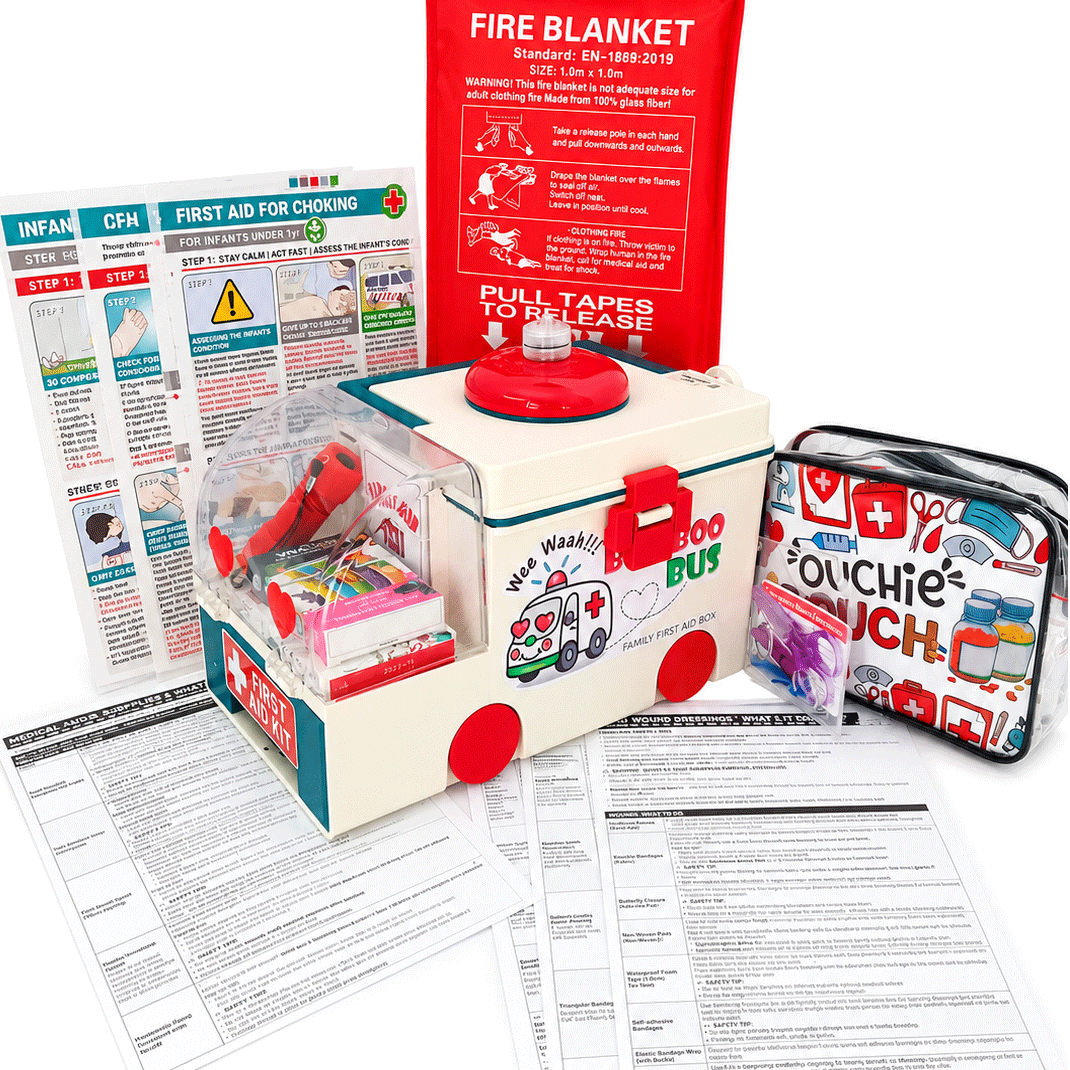
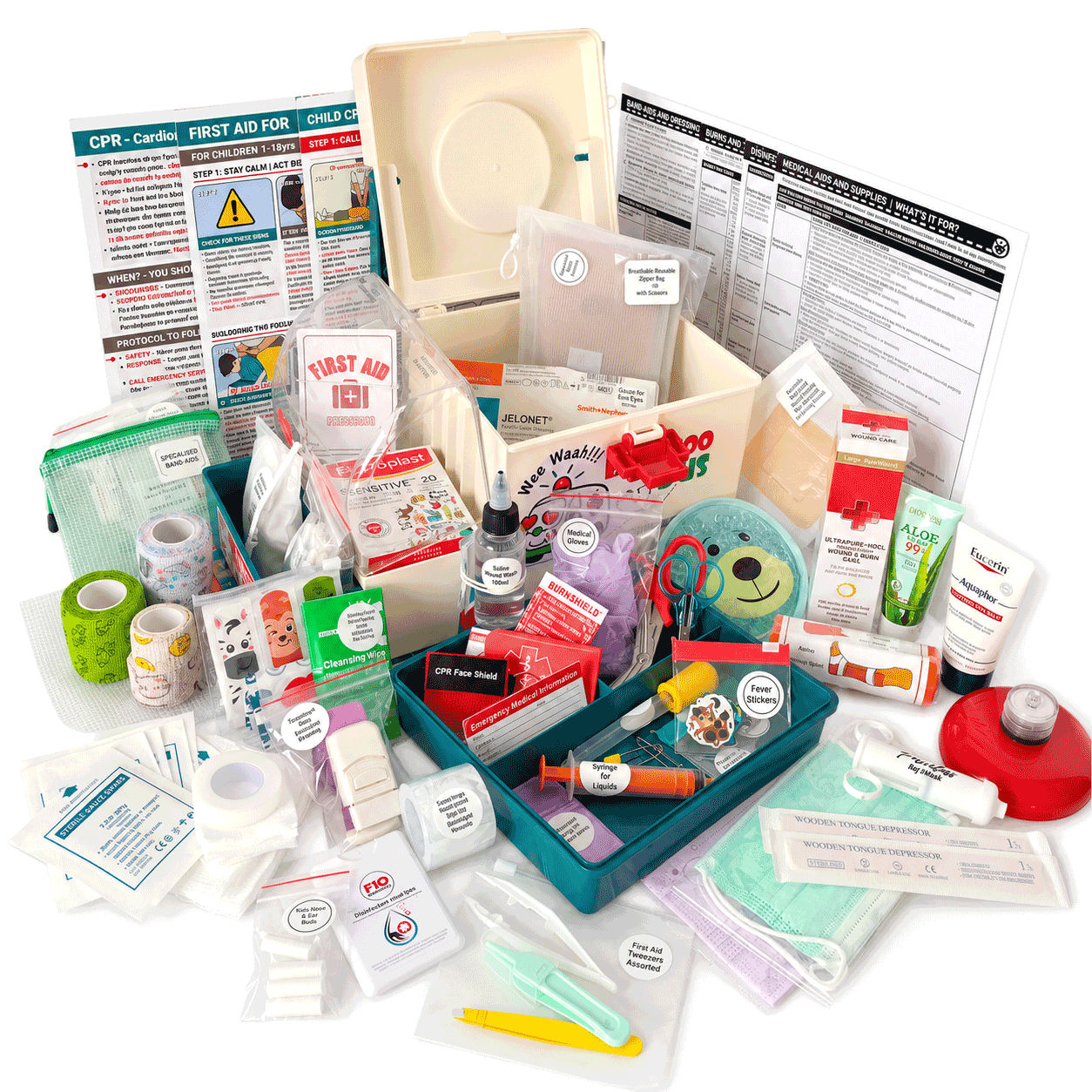
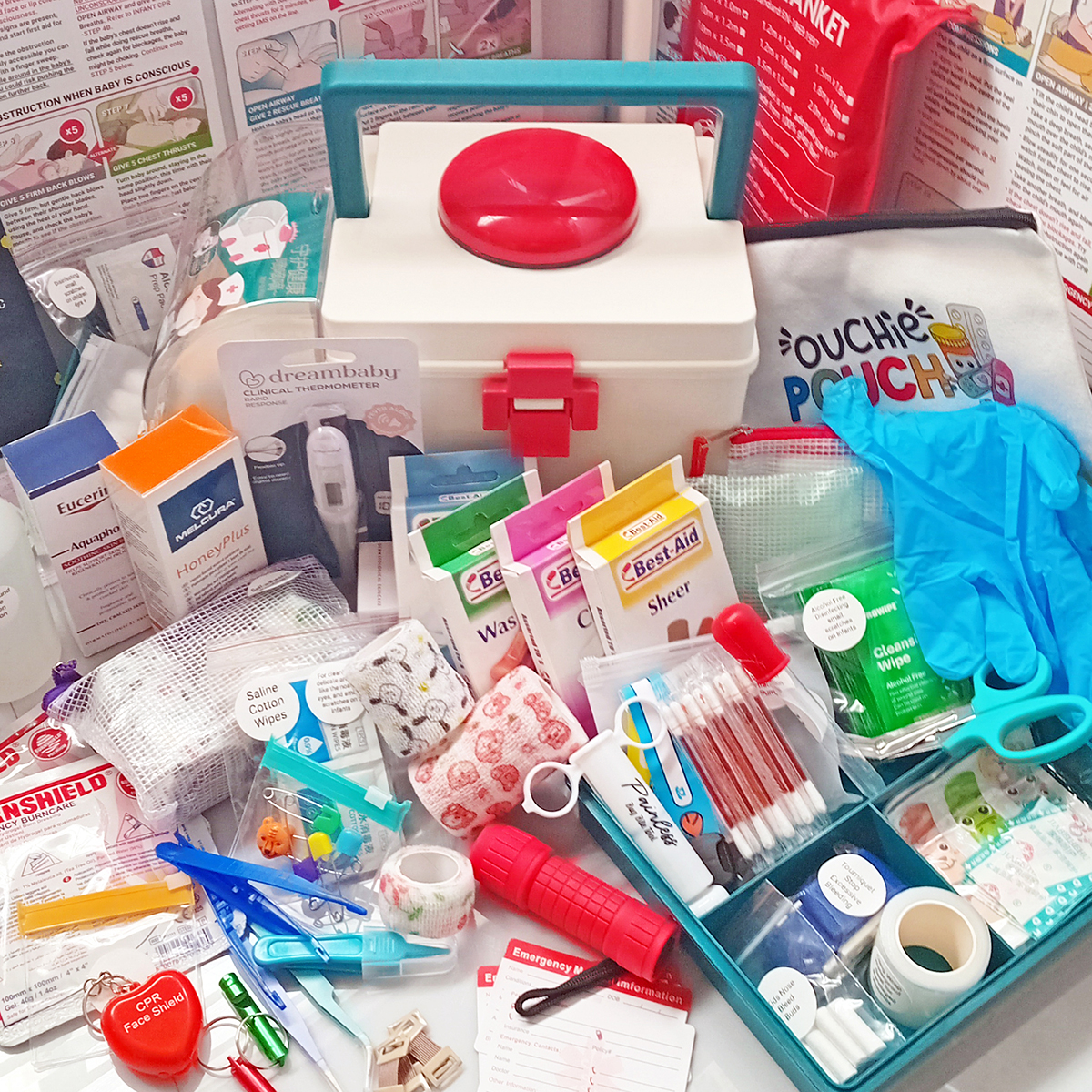
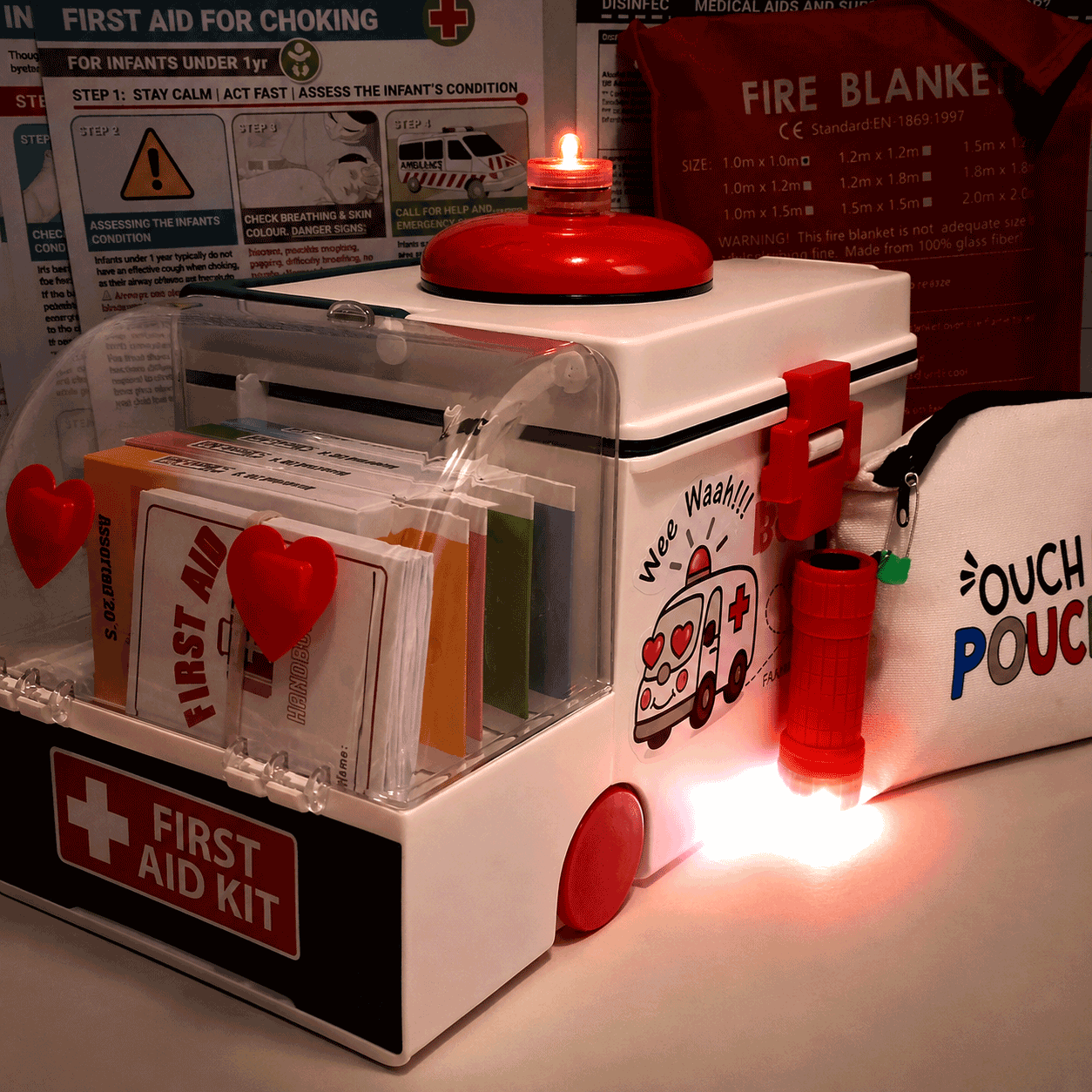
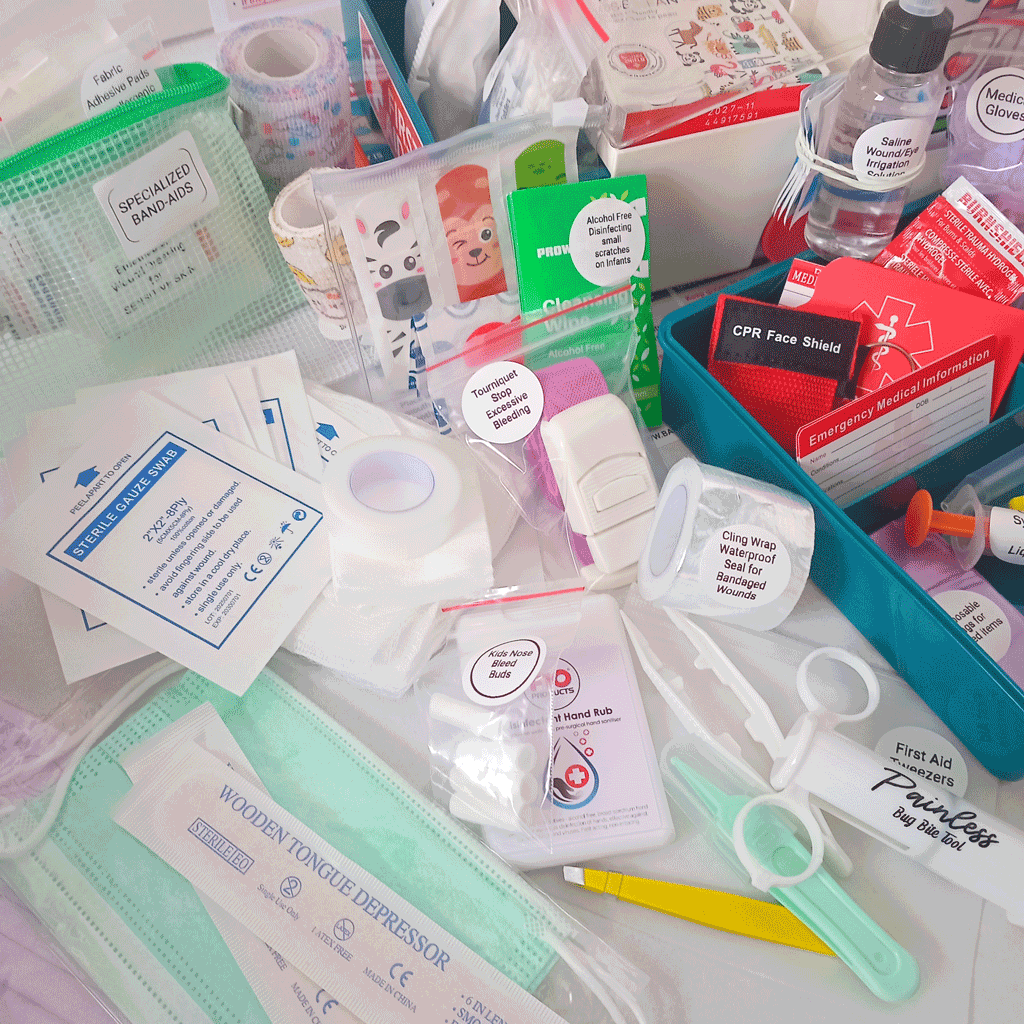
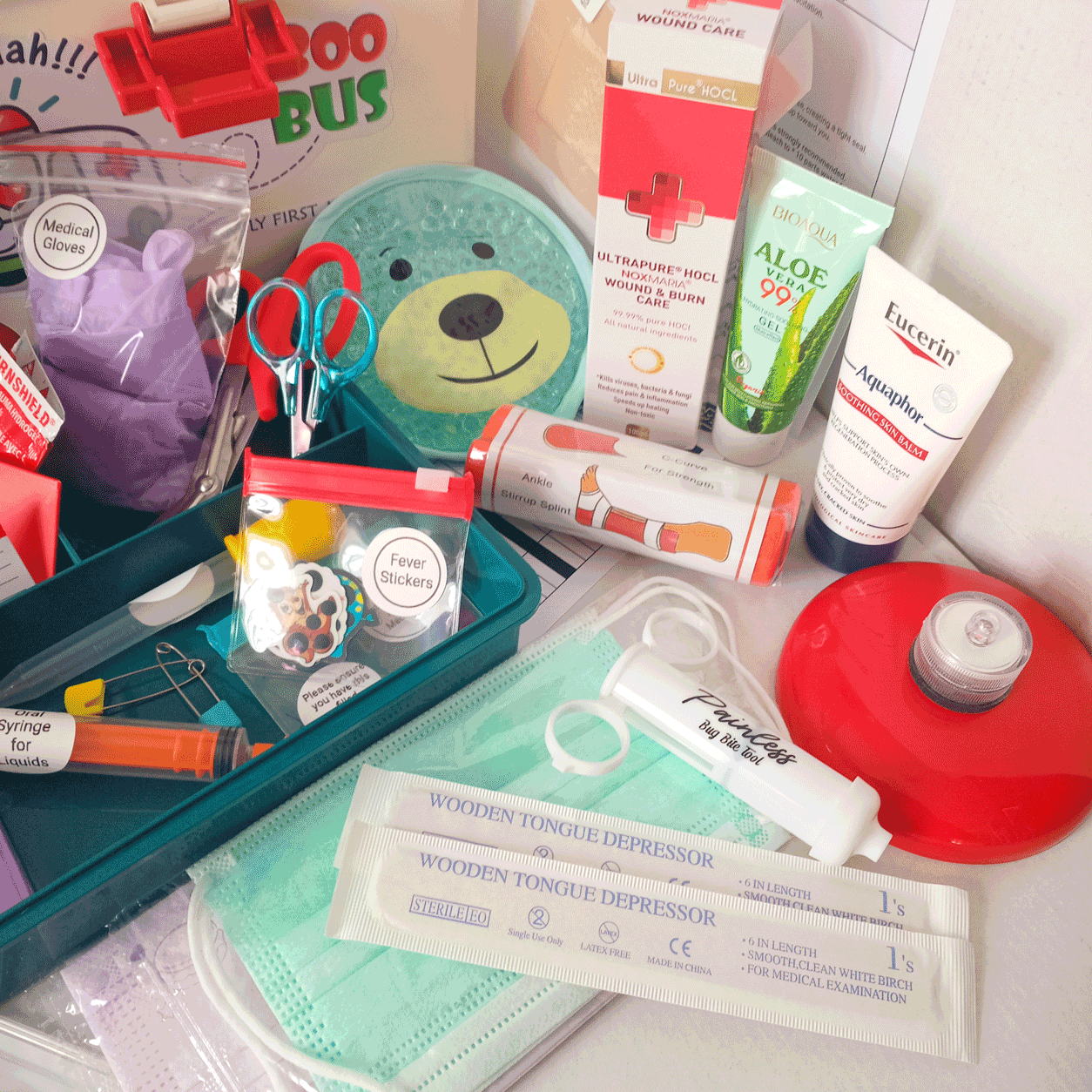
FAMILY FIRST AID KITS
BE PREPARED FOR EVERYDAY EMERGENCIES!
Explore Baby Proof SA’s collection of family first aid kits, including our adorable ambulance-inspired designs – to turn stressful moments into manageable ones, thoughtfully packed with families and little ones in mind.
READ MORE: What to Include in a Well-Stocked Family First Aid Kit »

RELATED ARTICLES
I hope this information has provided some valuable insight, if there is anything you would like to add or information you have spotted is incorrect, kindly contact Michelle on 082 499 5858 or email: michelle@babyproof.co.za
We’d like to THANK-YOU for getting on board with child safety and taking this important first step in your child’s future. We welcome you into our safety net!
Disclaimer: All images and content © 2007-present Baby Proof SA. All Rights Reserved.

